
Scaling a DTC brand through paid advertising can feel deceptively simple at first. Once you find campaigns that generate consistent revenue, the natural instinct is to increase spend and accelerate growth. In the early stages, this approach often works well and delivers predictable results.
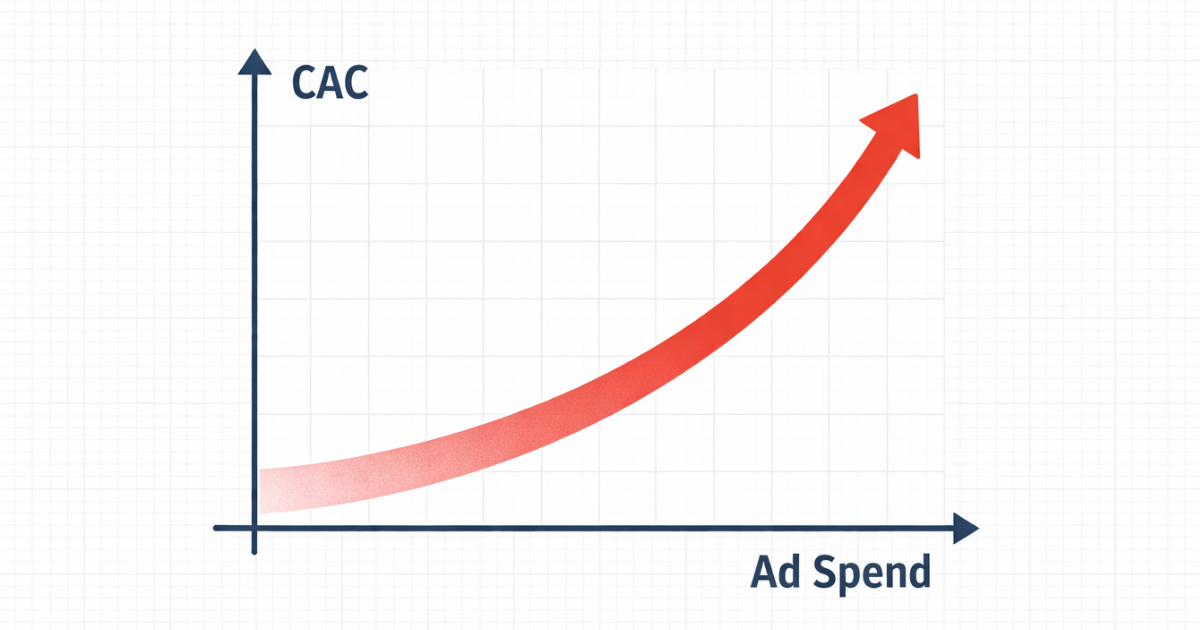
However, many brands eventually reach a point where performance starts to decline instead of improve. CAC rises, efficiency drops, and scaling becomes more difficult. This is where a shift in strategy becomes necessary.
Instead of continuing to push budgets higher, the focus needs to move toward expanding how growth is achieved. That’s where horizontal scaling comes into play.
What Vertical Scaling Looks Like
Vertical scaling refers to increasing spend on campaigns that are already performing well.
In practical terms, that means raising budgets, pushing more spend into top-performing ad sets, or increasing bids to capture more traffic.
And it’s not a bad strategy. In fact, it’s usually the right move early on.
When campaigns are still reaching high-intent audiences, increasing spend can drive meaningful growth without significantly hurting efficiency. But this phase is limited. Over time, performance begins to plateau, and further budget increases stop delivering the same returns.
Why Scaling Eventually Becomes Less Efficient
To understand why performance declines, it helps to look at how ad platforms distribute spend.
When campaigns launch, algorithms prioritize users who are most likely to convert. These are typically people with strong intent or high relevance to your product.
As budgets increase, platforms are forced to expand targeting to reach additional users and as targeting broadens, you begin reaching users who are less likely to convert. That’s when CAC starts to rise and efficiency declines.
This is where the law of diminishing returns becomes relevant: each additional euro spent tends to generate less return than the previous one.
The Moment Where Scaling Breaks
This is typically the point where growth becomes unstable. Campaigns are still generating revenue, but not at the same level of efficiency. Margins tighten, and performance becomes harder to predict.
Many brands respond by increasing budgets further, hoping to maintain growth. But in reality, this often accelerates the problem.
By pushing more spend into already saturated campaigns, you increase competition within the same audience pool. As a result, CAC rises faster and returns diminish further.
At this stage, continuing to scale vertically becomes increasingly inefficient.
What Horizontal Scaling Actually Means
Horizontal scaling takes a different approach.
Instead of trying to generate more results from the same campaigns, it focuses on expanding the number of opportunities to acquire customers.
That can include:
- reaching new audiences
- testing new creative approaches
- promoting additional products
- expanding into new marketing channels or markets
The goal is to increase total growth potential, rather than forcing more output from a limited system.
Finding Growth Within Your Existing Platforms
Before expanding into new channels, it’s often worth exploring additional opportunities within your current platforms.
In many cases, there is still untapped potential. You just need to approach it differently.
Expanding Beyond Your Core Product
Many DTC brands rely heavily on one hero product in their advertising. While this can drive strong initial results, it limits the available audience pool. Promoting additional products or categories allows you to reach customers with different needs and preferences.
This approach also reduces dependency on a single revenue driver, which can improve long-term stability.
Reaching New Types of Customers
Another limitation often comes from audience overlap. Even when campaigns appear broad, they frequently reach similar types of users. Expanding into new customer segments can unlock entirely new demand.
For example, the same product might appeal to different groups depending on positioning, such as premium buyers versus value-focused shoppers.
By tailoring messaging to different segments, brands can extend reach without relying solely on higher budgets.
Refreshing Your Creative Approach
Creative is one of the most powerful levers for unlocking additional growth.
Creative quality plays a major role in campaign performance. A new angle or format can significantly change how users respond to your ads.
Sometimes, the issue isn’t audience saturation, but creative fatigue.
Testing different formats, such as storytelling, testimonials, or user-generated content, can help reach new users, re-engage audiences and improve performance.
Expanding Into New Acquisition Channels
At a certain point, growth within a single platform becomes limited. That’s when expanding into new channels becomes essential.
Relying too heavily on one platform not only limits growth but also increases risk and diversifying into additional channels allows you to reach entirely new audiences.
Common channels for DTC brands include TikTok, YouTube, Reddit, Pinterest and native networks like Taboola and Outbrain. Each platform has different user behavior and content expectations.
For example, TikTok often rewards authentic, fast-paced content, while YouTube performs well with longer-form videos and product demonstrations.
According to Think with Google, using multiple channels can significantly improve overall marketing effectiveness.
By expanding across platforms, brands can access new demand without increasing pressure on existing campaigns.
Why Horizontal Scaling Leads to More Sustainable Growth
Horizontal scaling creates a more stable foundation for growth. Instead of competing more aggressively for the same users, you continuously expand your reach and open new acquisition paths.
This approach helps maintain more stable CAC levels over time and reduces dependency on a single platform. It also encourages ongoing experimentation, which is essential in a constantly changing advertising landscape.
As platforms evolve and competition increases, the ability to adapt becomes a key competitive advantage.
Spreading your ad dollars across channels is also a risk management strategy. If performance tanks in one channel, due to creative fatigue, changes or tracking issues, one can amplify other channels to compensate.
How the Most Successful DTC Brands Scale
Brands that scale successfully rarely rely on a single campaign or platform.
Instead, they build diversified systems that evolve over time. They continuously test new audiences, creatives, and channels, allowing them to grow without relying solely on increased spend.
This approach not only supports long-term growth but also makes performance more resilient to change.
Conclusion
Scaling paid advertising is not just about increasing budgets – it’s about expanding opportunities. While vertical scaling can drive short-term growth, it eventually reaches its limits as costs rise and efficiency declines.
Horizontal scaling offers a more sustainable path forward by opening new ways to acquire customers. Whether through new audiences, fresh creative strategies, or additional channels, it allows brands to grow without over-relying on a single system.
In practice, the most successful DTC brands combine both approaches. They scale what works, but at the same time, they continuously expand their reach.
Because in the long run, growth doesn’t come from spending more – it comes from creating more ways to win.